The Mandarin Tone Mistakes That Actually Change the Meaning
The tone errors that cause real trouble are not the mā má mǎ mà set. They are ordinary shop and restaurant words: mǎi and mài, shuǐjiǎo and shuìjiào, lǎobǎn and lǎobàn. Tingyin, a Mandarin tone-listening trainer, drills the four contours those pairs turn on. Pleco carries native recordings for over 34,000 words if you want to hear a specific one.

The pairs that actually cause trouble
A tone mistake matters when the wrong reading is also a real word that fits the sentence you just built. That is a much shorter list than the number of tone mistakes a learner makes. The table below is the part of it you are most likely to meet in a shop, a restaurant or a first conversation, with every gloss taken from CC-CEDICT.
| Pinyin | Characters | What each one means | Where it bites |
|---|---|---|---|
| mǎi / mài | 买 / 卖 | to buy / to sell | 我买 and 我卖 are both grammatical at a stall. The sentence survives and the transaction reverses. |
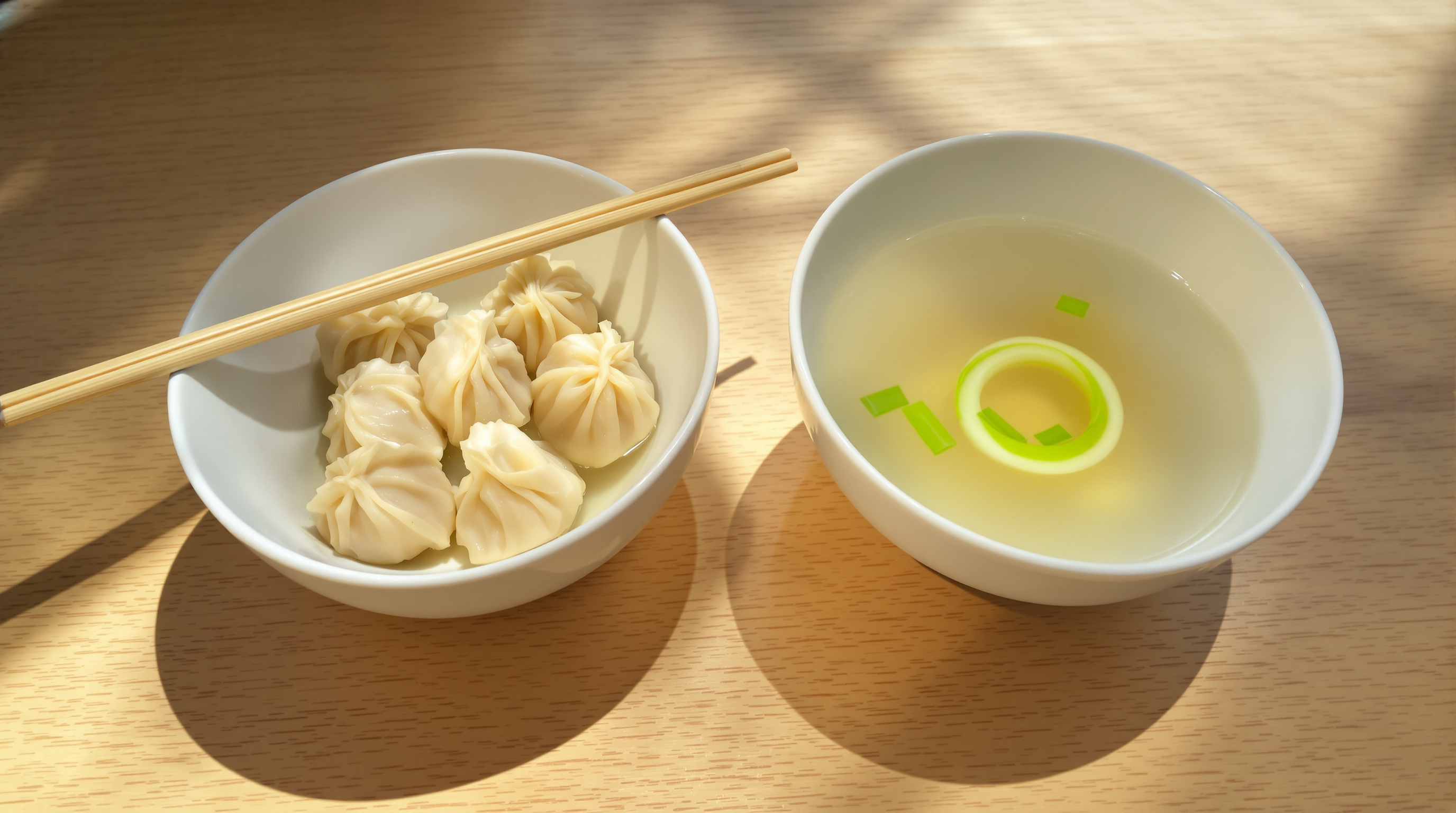
| shuǐjiǎo / shuìjiào | 水饺 / 睡觉 | boiled dumplings / to go to bed | Ordering. 我要水饺 and 我要睡觉 are built out of the same four sounds in the same frame. |
| wèn / wěn | 问 / 吻 | to ask / to kiss | 我想问你 is "I would like to ask you". The third-tone version is a different sentence entirely. |
| lǎobǎn / lǎobàn | 老板 / 老伴 | boss, proprietor / an elderly person's husband or wife | Getting a shopkeeper's attention. One tone on the second syllable turns a form of address into a claim about their marriage. |
| tāng / táng | 汤 / 糖 | soup / sugar | Both are things a counter can hand you, and the difference is a level tone against a rising one. |
| shùxué / shūxuè | 数学 / 输血 | mathematics / a blood transfusion | Saying what you studied. Same two syllables, both tones different, both real words. |
| yǎnjing / yǎnjìng | 眼睛 / 眼镜 | eye / spectacles | An optician, or a chemist. The first syllable is identical and the second is a neutral tone against a fourth. |
| xióngmāo / xiōngmáo | 熊猫 / 胸毛 | panda / chest hair | The zoo. The tones are swapped between the two syllables rather than changed on one. |
Look at the third row again. 问 wèn is not an unusual word you might avoid; it is inside 请问 qǐngwèn, the phrase most beginners use to open a question with a stranger. The tone that pair turns on is the one you produce dozens of times a day before you have produced anything else.
Why context does not always rescue you
Context does rescue you, most of the time, and that is the honest reason a beginner survives a year of wrong tones. It works by making the wrong reading absurd. Nobody hears 我想吻你 in a stationery shop and reaches for the second meaning, because one of the two is impossible there and the other is merely a sentence.
The pairs above are the cases where that mechanism has nothing to grip. Both readings are possible in the same place, to the same person, in the same grammatical frame. 老板 and 老伴 are both things you could say to a person standing behind a counter. The listener cannot use the room to choose; they have to use the tone.
And the cost is not only the misunderstanding. A listener who has to run a repair on your second word is a listener who is no longer following your fourth. That is the part that does not show up in a textbook exercise, where the sentence sits still on the page and waits.
Prices and names are the worst case, because they carry no context at all. 白 bái and 百 bǎi differ by one tone, and a number has no surrounding sense to lean on. Neither does a name, which is why hearing the difference between the tones stops being an academic skill the first time someone introduces themselves.
What a tone drill can and cannot give you
Tingyin is a Mandarin tone-listening trainer, and the exercise is exactly one thing: a clip plays, you pick the tone. Every clip is a human recording rather than synthesis, and the shipped manifest records the source, speaker, licence and sha256 of all 637 of them, 622 under CC BY-SA 4.0 and 15 under CC0. Level 1 is free and needs no account at all; level 2 is free once you sign in.
Inside that corpus, 44 segmental strings appear with more than one tone pattern. Twenty of them are complete four-way sets at levels 1 and 2 - ba, chu, da, hai, hui, ji, jie, la, ma, qi, shi, wa, xi, xiang, xie, ya, yi, you, zhe, zhi - each present with all four tones, so the tone is the only thing left to answer on. 水 shuǐ and 睡 shuì are both there at level 2, read by the same speaker, which makes them the one pair on this page you can drill directly against itself.
The honest part is what is missing. 买 mǎi is in the corpus and 卖 mài is not. 问 wèn is there and 吻 wěn is not. A tone drill trains the contour, and the contour is what the pairs turn on, but the vocabulary is where you actually meet them. Anyone telling you a listening app will teach you the pairs themselves is selling you the wrong thing.
How to work on the pairs, in order
The sequence matters more than the volume, because the second step is the one people skip and it is the one that decides whether the first step transfers.
- Get the four contours reliable in isolation first. If you cannot tell a rising tone from a low one on a single syllable, no amount of vocabulary drilling will fix a pair.
- Learn each pair as a pair, from the start, in one flashcard. Splitting 买 and 卖 into two cards teaches you two words and no contrast.
- Say both out loud, back to back, in the same breath. The pair is easier to hear in your own mouth than in someone else's sentence.
- Put each one in the frame where it bites. 我要水饺 is worth ten repetitions of 水饺 alone, because the frame is what the tone has to survive.
- Come back to the isolated drill when a pair keeps failing. A pair you cannot hear at all is a contour problem wearing a vocabulary costume.

Frequently asked questions
What is the best way to practise Mandarin minimal pairs?
Drill the contour and the vocabulary separately, then put them together in a sentence frame. Tingyin covers the first half, with 637 human recordings and 44 segmental strings that carry more than one tone pattern, so the tone is the only variable. Pleco covers the second half well, with native recordings for over 34,000 words and a flashcard system you can point at a specific pair. Neither one replaces saying both words out loud back to back.
How do I stop confusing the third and fourth tones?
Listen for where the pitch ends rather than where it starts, because a third tone lands low and stays there while a fourth arrives at the bottom and is finished. 水 shuǐ and 睡 shuì are both in Tingyin at level 2 from the same speaker, which removes voice as a variable. If the pair is still ambiguous after twenty tries, what the third tone actually does is worth reading before you drill any further.
Is it safe to rely on context instead of learning the tones?
For most sentences, yes, and that is why it feels like it works. It stops working on prices, names and the pairs in the table above, where both readings fit the same frame and the listener has nothing to fall back on. The cost is quieter than a misunderstanding too: the person you are talking to spends attention repairing your second word instead of hearing your fourth.
What is the difference between a minimal pair and a homophone in Mandarin?
A minimal pair differs in exactly one feature, and in these cases that feature is tone - shuǐjiǎo and shuìjiào share every consonant and vowel. A homophone matches on tone as well, like 是 shì and 事 shì, and no amount of listening will separate those. The pairs worth drilling are the first kind, because there is a signal in the audio to find.
Am I really going to tell a shopkeeper I want to kiss them?
Probably not, and the story gets told more often than the thing happens. What does happen constantly is the boring version: 老板 comes out as 老伴, or a price comes out with the wrong tone on 百, and the conversation slows down by a beat while someone works out what you meant. Full course apps like HelloChinese will drill the vocabulary and the speaking, which is the other half of this; the listening half is the one people assume they already have.